Westminster Water Is Hard — Here's What It Costs You Each Year
7.72 GPG · 132 ppm · +6% vs US average · 2026 report
Source: Westminster, 2026 report
HardWestminster water is hard at 7.72 GPG (132 ppm). Scale and spotting are noticeable, and a softener or conditioner is worth considering.
How we calculate this: based on the Battelle Memorial Institute study commissioned by the Water Quality Association (WQA), hard water is estimated to cost the average affected household roughly $800/year in 2010 dollars (~$1,230 today, after ~54% inflation). We scale that by 7.72 GPG versus a ~10 GPG reference. The percentages above come from the Battelle Memorial Institute study (commissioned by WQRF), the US Department of Energy, and the Water Quality Association. This is an estimate — not a certified per-household figure — and actual savings vary by water use, fuel type, and local rates.
Hardness
Parts per million
vs US average
Contaminants in water
How Westminster Compares
Water hardness scale
| Classification | Grains per gallon (GPG) | mg/L (ppm) | What it means |
|---|---|---|---|
| Soft | 0–3.5 | 0–60 | No scale; softener unnecessary. |
| Slightly Hard | 3.5–7 | 60–120 | Minor spotting; conditioning optional. |
| Hard← your water | 7–10.5 | 120–180 | Visible scale; softener recommended. |
| Very Hard | 10.5+ | 180+ | Heavy scale; whole-home softener strongly recommended. |
Why Is Westminster Water So Hard?
Westminster sits at 7.72 GPG (132 ppm), which puts it squarely in the “hard” category. That’s right at the national average of about 7.3 GPG, according to USGS. But here’s the thing about Westminster: the city’s water doesn’t come from one single source, and that’s part of why the hardness number lands where it does.
The Front Range cities like Westminster pull from a mix of surface water sources, and those sources are the real story. The water that reaches your tap starts as snowmelt in the mountains, flows down through streams and reservoirs, and picks up minerals along the way. As that water travels through the Rocky Mountains and across the high plains, it runs over and through sedimentary rock layers that are rich in limestone and dolomite. Those formations are essentially compressed ancient seabeds, full of calcium and magnesium carbonates. Rain and snowmelt are naturally slightly acidic, and when that water percolates through limestone, it dissolves the rock. That’s the whole story of hardness: calcium and magnesium ions literally leach out of the ground and into the water.
Westminster’s water is a blend, and that’s typical for the area. The city relies on surface supplies that gather runoff from a wide drainage area. The longer the water stays in contact with mineral-rich rock and soil, the more hardness it picks up. Mountain streams that run fast over granite tend to stay softer, but once that water hits the lower-elevation reservoirs and travels through the plains, it has more time to dissolve the calcium and magnesium that make water hard. At 7.72 GPG, Westminster’s blend sits right at the threshold where the USGS classifies water as hard (anything above 7 GPG), and it’s not far from the “very hard” cutoff at 10.5 GPG.
One thing worth understanding: hardness is not a health issue. The EPA doesn’t regulate it as a hazard. It’s classified only as an aesthetic concern under the Secondary Maximum Contaminant Level. That means the EPA isn’t worried about you drinking it. The concern is what it does to your pipes, your water heater, and your soap.
How Westminster Compares to Nearby Cities
Because Westminster’s water comes from surface sources shared across the Front Range, its hardness is broadly similar to what you’ll find in neighboring communities. Cities along Colorado’s northern Front Range all draw from the same general mountain runoff and reservoir systems, so they tend to land in the same hard-water ballpark. That said, the exact numbers can shift from one city to the next depending on how much each utility blends different source waters and how the water is treated before it reaches homes.
The practical effect is that if you’ve lived in other Front Range towns, you’re probably already familiar with what hard water feels like. The film on glassware, the scale building up on faucets, the extra detergent you need to get a lather going. You’re not imagining it. That’s the calcium and magnesium doing their thing.
Here’s what the hardness actually costs you in practical terms. The Water Quality Association, an industry group, estimates that hard water raises energy, appliance-wear, and cleaning costs across a household. That estimate scales with your actual water hardness, so the calculator on this page will give you a figure specific to Westminster’s 7.72 GPG rather than a generic national number. The WQA’s base reference is roughly $800 per year in 2010 dollars, which works out to about $1,230 in 2026 dollars when you adjust for inflation. But again, that’s an industry estimate, not a measured study, and your real number depends on your household size and water use.
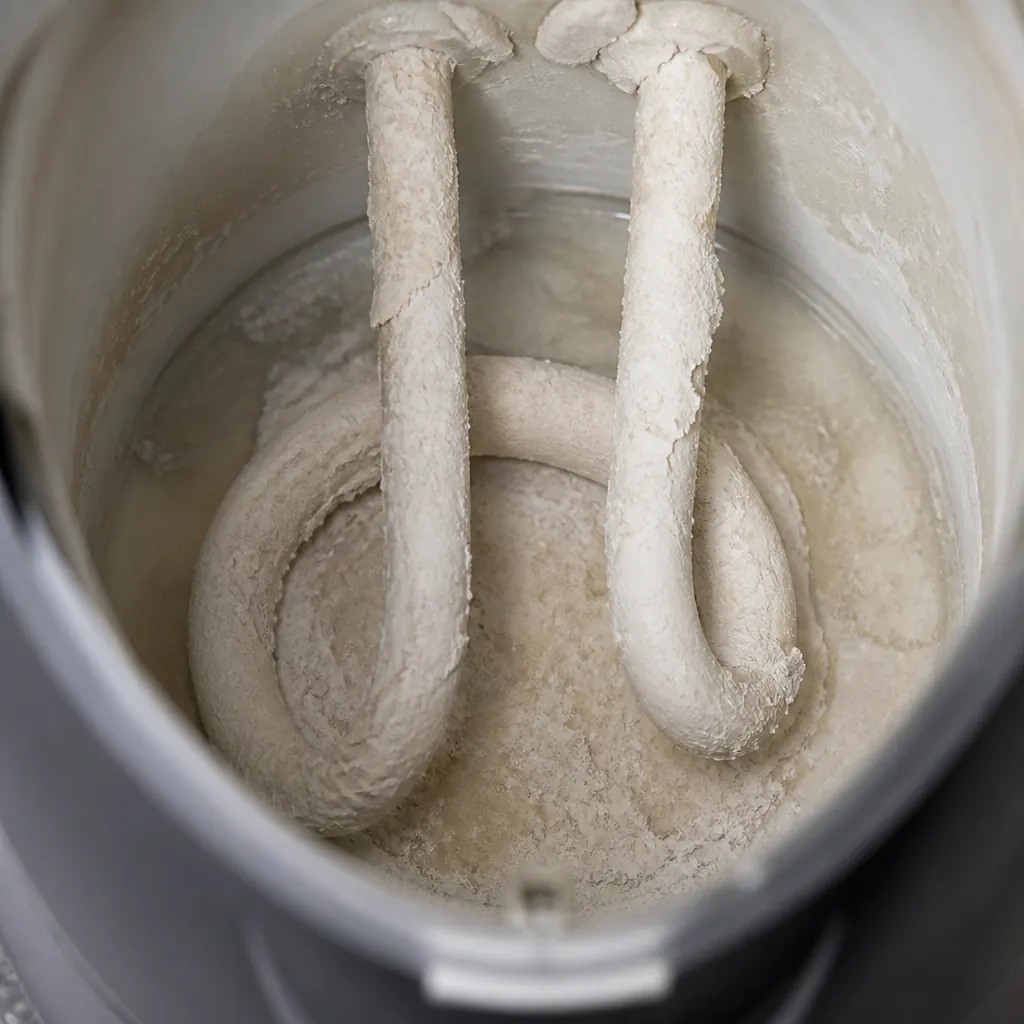
The appliance damage is where hard water really hits. Battelle Memorial Institute and the Water Quality Research Foundation found that for a typical household using 50 gallons of hot water per day, every 5 GPG of hardness costs about 4% in gas water-heater efficiency. At Westminster’s 7.72 GPG, that’s a measurable hit to your energy bill every month. And the Department of Energy notes that just a quarter-inch of scale buildup can cut water-heater efficiency by up to 40%. That scale is exactly what hard water deposits. Hard water also shortens water-heater service life by roughly 30 to 50%, according to industry data. So that water heater you’re hoping will last fifteen years? In a hard-water town like Westminster, you might be shopping for a new one closer to the eight-to-ten-year mark.
On the cleaning side, a 2010 study by the Water Quality Association and Battelle found that soft water lets you use up to 50% less laundry detergent and up to 70% less dish soap compared to hard water. That’s money back in your pocket every single week, not just once a year.
How does Westminster stack up against the rest of Colorado? It's hard at 7.72 GPG — Longmont, Thornton, and Boulder sit nearby with different numbers. See the full hardest-water ranking for context.
See where Westminster sits on the Colorado water hardness map →
Want the broader explainer on what hardness actually is and how it behaves? Read hard water vs. soft water, explained.
What 7.72 GPG Actually Does to a Westminster Home
At 7.72 GPG, hard water stops being subtle in a Westminster home. Here's what it actually does:
- Water heater efficiency drop. The US Department of Energy (and its equivalent studies) attribute scale as the single biggest efficiency killer in hard-water homes — at 7.72 GPG, your heater operates roughly 6% below where it would on soft water, which shows up directly on the energy bill.
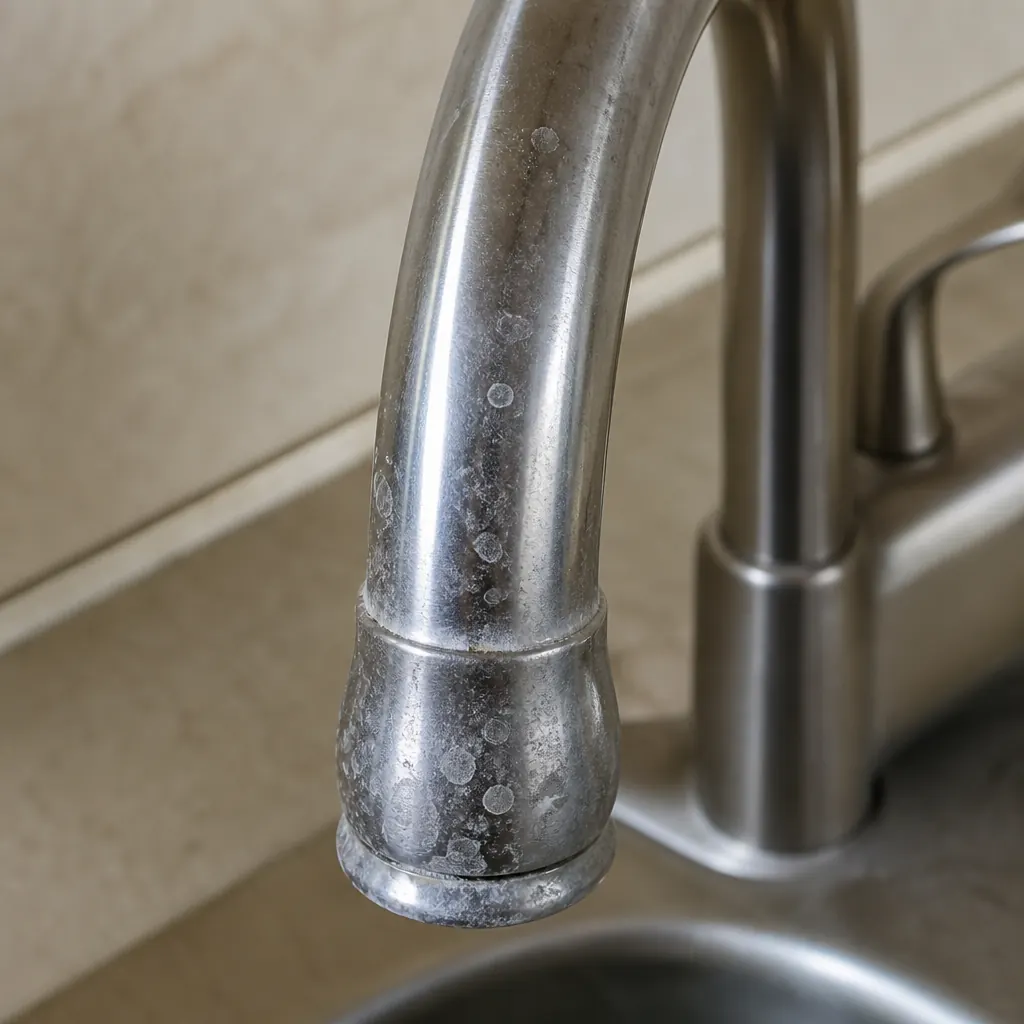
- Fixture and glassware scale. White mineral deposits build on faucets, showerheads, and dishes within weeks of cleaning.
- More detergent. The Water Quality Association notes hard water can require 50–75% more soap to achieve the same cleaning — and fabrics wear faster from mineral abrasion in the wash cycle.
- Shortened appliance life. Dishwashers, washing machines, and water heaters accumulate internal scale that quietly cuts their service life.
The Battelle Memorial Institute's study — commissioned by the Water Quality Research Foundation — is the cleanest proof: water heaters on untreated hard water failed in under 2 years of the 10-year test, while identical units on softened water ran the full decade. The mineral damage is real and measurable.
Do You Need a Water Softener in Westminster?
Yes, for most homes. At 7.72 GPG, Westminster water is hard enough that a whole-house ion-exchange softener pays for itself — through longer appliance life, less detergent, and less descaling. The Battelle water-heater finding alone (untreated units failing in under 2 years) makes the case at this hardness.
At 7.72 GPG a salt-free conditioner will reduce scale but won't remove the minerals — you'll still get the soap and skin effects. For actual softening, ion exchange (a traditional softener) is what removes hardness.
What Size Softener Does Westminster Need?
Sizing a softener is a two-number equation: your household's daily water use × your hardness. The rule of thumb is grains per day = (people) × (75 gallons) × (GPG).
- At 7.72 GPG, a family of four uses roughly 2,316 grains of hardness per day.
- A 32,000–48,000-grain softener regenerates roughly every 11–17 days — within the 3–7 day window that keeps salt and water use efficient.
- Round up, not down: an undersized unit regenerates too often and wastes salt. Metered (on-demand) regeneration saves the most salt and water.
For Westminster at 7.72 GPG, a 32,000–48,000-grain metered softener is the safe default for a 3–4 person home. A larger household, or one with unusually high water use, should size up to 64,000 grains.
What Are the Signs of Hard Water in a Westminster Home?
At 7.72 GPG (132 ppm), Westminster residents notice significant hard-water effects. The USGS classifies water above 7 GPG as hard and notes it causes measurable physical damage to plumbing and appliances.
- White or grey crust on faucet aerators, showerheads, and around drains — calcium carbonate depositing as water evaporates.
- Spotty glassware even after a full dishwasher cycle — mineral film left behind when water dries.
- Falling water-heater efficiency — scale insulates the heating element, forcing the unit to work harder and pushing up the energy bill.
- Flat, stiff hair — calcium bonds to hair proteins and prevents shampoo from rinsing clean.
- Dry, itchy skin — dissolved minerals disrupt the skin's moisture barrier.
- Weak soap lather — hardness ions react with soap to form insoluble scum instead of suds.
- Shorter appliance life — washing machines, dishwashers, and coffee makers accumulate internal scale.
The Battelle Memorial Institute study commissioned by the Water Quality Research Foundation found untreated very-hard-water heaters failed in under 2 years, versus a full 10 years on softened water. At Westminster's 7.72 GPG, that equipment degradation compounds faster than most homeowners expect.
Best Treatment for Westminster Homes
At 7.72 GPG you want actual removal, not just scale prevention. Two pieces of equipment cover most needs:
Aquasana SimplySoft 40,000-Grain Softener
A metered whole-house salt-based softener sized for Westminster's 7.72 GPG. Removes hardness minerals via ion exchange for genuinely soft water — no more scale, spotting, or stiff laundry. 40,000-grain capacity regenerates about weekly for a typical 3–4 person home.
check current price
See on Aquasana →Aquasana SmartFlow Reverse Osmosis (drinking water)
The under-sink RO handles everything you drink. Removes lead, arsenic, fluoride, mercury, and PFOA/PFOS — then remineralizes for taste. The higher-purity companion to a whole-house softener or filter.
check current price
See on Aquasana →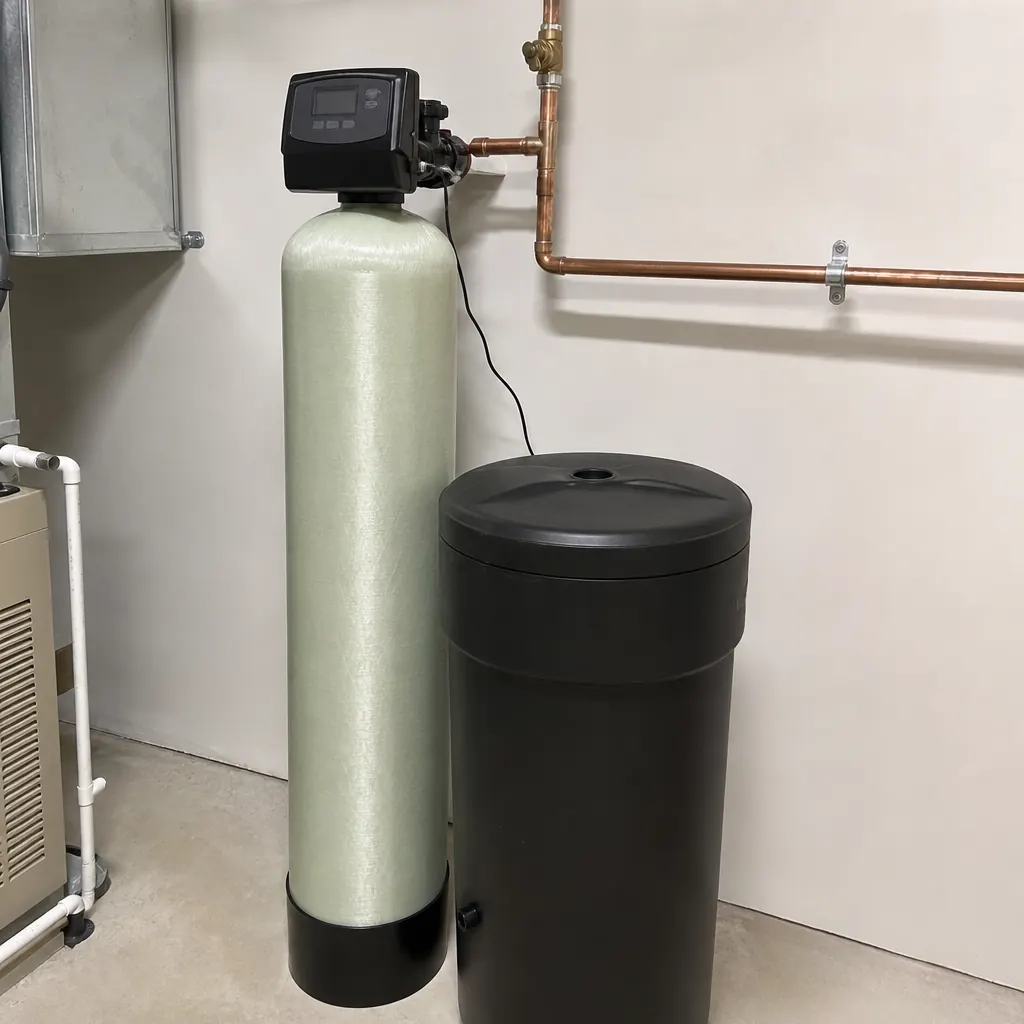
A whole-house water softener pays for itself in roughly 13 months at Westminster's hardness level — after that, the savings accrue every year.
How Do You Test Water Hardness in Westminster?
This page reports Westminster's system-wide average (7.72 GPG), but your tap can vary slightly by neighborhood, pipe age, and in-home filtration. For a step-by-step, see how to test your water hardness at home — it walks through test strips, the free soap-shake check, TDS meters, titration kits, and certified lab tests.
- Test strips (~$10) give a GPG reading in about 30 seconds and are accurate enough to decide whether to invest in treatment.
- TDS meter (~$15) measures total dissolved solids, a rough hardness proxy — but it doesn't separate hardness from other minerals.
- Lab test — most water treatment companies in Westminster offer free in-home tests (expect a sales pitch); for an independent result, the EPA maintains a list of certified labs.
Note: the EPA doesn't regulate hardness (it's a nuisance, not a health hazard), but the EWG Tap Water Database tracks contaminants above health guidelines for Westminster's utility — see our Westminster water-quality report for what's actually been detected.
What about Westminster water quality?
Hardness is separate from safety. Westminster's water meets all EPA legal limits — 12 detected contaminants, none above the limit.
The ones people actually ask about:
Compare Westminster to Other Colorado Cities
Other Hard Water Cities
Explore More
Frequently asked questions
Is Westminster water hard or soft?
Westminster, Colorado water is hard at 7.72 grains per gallon (132 ppm). That is considered hard enough to cause scale buildup and spotting.
How much does hard water cost the average Westminster household?
Based on the WQA-commissioned Battelle Memorial Institute study, hard water is estimated to cost the average affected household roughly $800/year in 2010 dollars (~$1,230 today after ~54% inflation) — an estimate, not a measured per-household figure. Scaled to Westminster's 7.72 GPG hardness, that works out to about $950/year (or ~$79.17/month) for a typical home — see the calculator on this page for the full breakdown.
Does Westminster need a water softener?
Likely — at 7.72 GPG you'll see spotting and scale, and a softener or salt-free conditioner will help.
Why is Westminster's water hard?
Hardness comes from dissolved calcium and magnesium picked up as water passes through rock and soil before reaching Westminster's treatment plant.
How do I test my water hardness in Westminster?
Use a home test kit (test strips for a quick read, or a TDS meter for dissolved solids), or check your utility's annual Consumer Confidence Report (CCR). For lab-accurate results, send a sample to a certified lab.
Who supplies Westminster's water?
Westminster's water comes from municipal supplies; contact your utility for its annual water quality report (Consumer Confidence Report).
What's the difference between grains per gallon and ppm?
1 GPG (grains per gallon) equals 17.1 ppm (mg/L). To convert: 7.72 GPG × 17.1 = ~132 ppm. Water is "hard" above roughly 7 GPG (120 ppm).
Sources & data
Hardness and water-quality data compiled from authoritative public sources.
Recommended solutions for Westminster
We may earn a commission when you buy through links on our site. This doesn't affect our recommendations. Full disclosure.
💧 Don’t rely on old numbers
These numbers change as new data comes out. Get notified when they get updated, and get our take on what to do about it. Unsubscribe anytime.
💧 Water treatment pros: this page is yours to share
This page helps customers understand their water's risks and costs — so they can weigh whether service is worth it. We recommend sharing this page along with our hard water vs soft water guide in your next quote or follow-up to fully explain the value of your services.