Quick answer: Hard water doesn’t cause eczema, but it can make it worse. The calcium and magnesium in hard water react with soap and detergent to form a residue that sits on the skin, disrupting the skin’s protective barrier — which is already weak in people with eczema. The result is drier, itchier, more easily irritated skin after bathing. Softening the water often eases flares, though it’s one factor among many, not a cure.
If you or your child has eczema and lives in a hard-water area, this is worth understanding — because it’s one of the few environmental variables you can actually change, and the evidence that it helps is real.
Why hard water irritates eczema-prone skin
Eczema (atopic dermatitis) is fundamentally a barrier problem. Healthy skin keeps moisture in and irritants out. In eczema, that barrier is leaky, so skin loses water faster and lets irritants in more easily.
Hard water makes this worse through a specific chemical reaction. When soap or body wash mixes with hard water, the calcium and magnesium bind to the soap molecules and form an insoluble residue — the same film that makes “soap scum” on your shower walls. A 2016 University of Sheffield randomized trial found children with eczema who bathed in softened water had measurable symptom improvement, and the National Eczema Association lists hard-water mineral residue among the environmental irritants worth reducing. Two problems follow:
- The residue coats the skin, drying it further and blocking its natural oils.
- More soap is needed to lather, so you end up using more cleanser, which strips the skin even harder.
The net effect is skin that’s tighter, itchier, and more reactive right after a shower — exactly the pattern many eczema sufferers describe.
What the research shows
The most important evidence is a 2011 randomized controlled trial in the UK, published in the Journal of Allergy and Clinical Immunology. Researchers studied children with moderate-to-severe eczema living in hard-water areas, installing water softeners in half the homes. The group with softened water showed a meaningful reduction in eczema severity over the trial period — and this was independent of any change in medication or other factors.
Other studies and clinical reviews support the same conclusion: hard water doesn’t sit well on compromised skin. The mechanism is well-established — it’s the same mineral-soap interaction that leaves residue everywhere — and the clinical signal (softer water = slightly better eczema outcomes) is consistent.
The honest caveat: a softener is a supportive measure, not a treatment. Eczema is driven by genetics, immune function, and environment. Soft water removes one irritant from the equation; it doesn’t replace moisturizers, trigger avoidance, or prescribed medication. But for people in hard-water areas, it’s a legitimate, evidence-backed piece of the puzzle.
Signs hard water is affecting your skin
- Tight, dry, itchy skin immediately after showering or washing hands.
- A “not quite clean” feeling or filmy residue left on skin after bathing.
- Needing noticeably more soap or body wash to get a lather.
- Eczema that flares specifically after bathing, doing dishes, or laundry day.
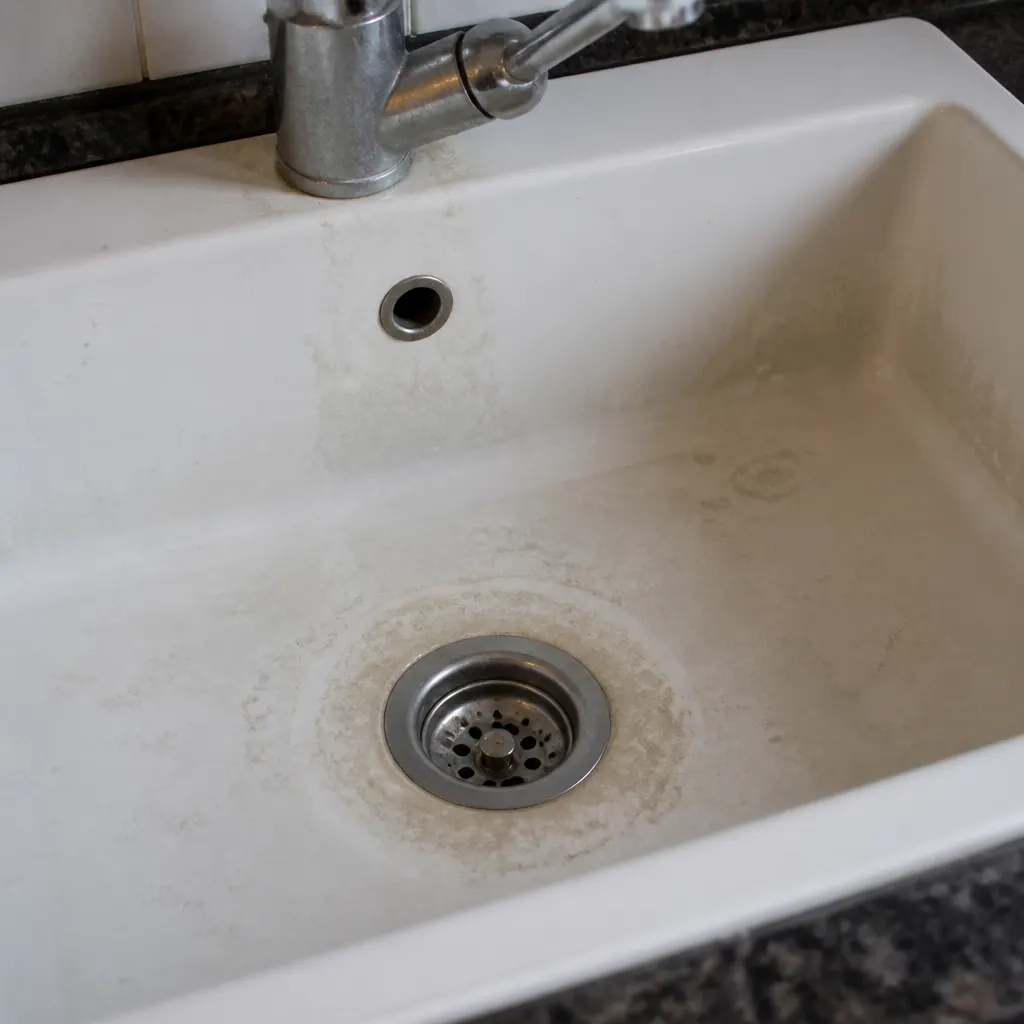
- White scale on faucets, showerheads, and glassware — your household’s visible “hard water test.”
What actually helps
Daily habits (highest impact, no equipment needed):
- Take short, lukewarm showers — hot water strips the skin barrier faster than hard water alone.
- Use a soap-free, syndet cleanser (like Cetaphil or a cream-based wash). These lather and rinse better in hard water and strip less.
- Moisturize within three minutes of patting dry, while skin is still slightly damp, to lock in moisture.
Address the water itself:
- A whole-house water softener removes the minerals that form the irritating residue. This is the only way to actually soften shower and bath water.
- A shower filter removes chlorine but does not soften water — helpful only if chlorine is a separate trigger for you.
- If a softener isn’t feasible, a final rinse with soft or distilled water (a clean spray bottle helps) removes the residue before you towel off.
Work with a professional: if eczema is
The soap-and-hard-water reaction, in plain terms
The reason hard water matters for eczema comes down to a specific chemistry that’s easy to picture. Soap and most cleansers are surfactants — molecules with one end that grabs oil and dirt, and another that grabs water. They work by lifting grime off your skin so water can rinse it away.
Hard water breaks that. The dissolved calcium and magnesium latch onto the surfactant molecules and form clumps that don’t rinse off cleanly. Those clumps stay on your skin as the filmy “soap scum” you can feel. The practical consequences:
- You use more soap — it takes more cleanser to get a lather, so more ends up on your skin.
- The residue lingers — that film sits on the skin barrier, drying it and blocking its natural oils.
- Rinsing never feels complete — which for eczema-prone skin means constant, low-grade irritation after every wash.
This is why a soap-free syndet (synthetic detergent) cleanser helps: it’s less prone to the mineral reaction, so it lathers and rinses better in hard water and strips less. For eczema skin, swapping to a syndet is often as impactful as softening the water itself.
Hard water in the laundry: the echo effect
Eczema isn’t only about what touches you directly in the shower. Hard water also affects how well your laundry rinses, and that echoes onto your skin.
- Hard water prevents detergent from rinsing out fully, so mineral-detergent residue stays in fabric fibers.
- That residue sits against your skin through clothing, bedding, and towels — a constant, low-level irritant for eczema.
- Sheets, pajamas, and towels (the fabrics in closest, longest contact with skin) are the worst offenders.
If you have eczema, softener-use in the laundry often matters as much as a shower filter. Washing in softened water, or adding a rinse aid like white vinegar to the rinse cycle (which helps dissolve mineral residue), reduces the amount of irritant your bedding carries. It’s one of those indirect fixes that doesn’t get talked about enough but makes a real difference for people with barrier-compromised skin.
A realistic before/after expectation
If you soften your water or switch your bathing routine, here’s what to actually expect — and what not to:
- You may not see an overnight change. The skin barrier rebuilds slowly; this is a supportive change, not a cure. Give it a few weeks of consistent routine.
- You’ll likely notice less post-shower itch and tightness — that’s the most common, immediate difference people report.
- Flares may still happen from non-water triggers (fragrance, stress, seasonal allergies, certain fabrics). Soft water removes one trigger, not all of them.
- Track it. Keep a simple log of flare-ups alongside a water-hardness reading, so you can tell whether softening is actually helping your skin rather than assuming it will.
The people who get the most out of softening are those in genuinely hard-water areas (roughly 10+ GPG), where the mineral load is high enough that removing it produces a noticeable change. In softer-water areas, the water was never a major factor, and the effort is better spent on moisturizing and trigger avoidance.
A final practical note: always patch-test any new cleanser or treatment on a small area first, especially with eczema-prone skin, and introduce changes one at a time so you can tell what’s actually helping. Hard water is one lever among several — changing it sensibly beats changing everything at once.
The bottom line is straightforward — if your water is hard and your eczema flares after bathing, softening the water is a sensible, evidence-backed step. It won’t replace your moisturizer, your medication, or your trigger awareness, but it removes one skin irritant you can actually control.
Quick reference
- The 60-second version: hard water makes eczema worse by leaving a mineral-soap film on already-fragile skin.
- Soft water, a soap-free syndet cleanser, short lukewarm showers, and moisturizing within three minutes are the highest-impact daily changes.
- A shower filter removes chlorine but does not soften water — if hard-water minerals are the trigger, you need a softener.
- Softening is a supportive measure, not a cure; track flare-ups against water hardness to see if it’s actually helping you.
The takeaway
A couple of practical notes round this out. First, the shower isn’t the whole story — hard water in your laundry leaves detergent-and-mineral residue in your sheets, towels, and pajamas, the fabrics that sit against eczema skin the longest, so softening the laundry water (or adding white vinegar to the rinse cycle) often matters as much as anything you do at the sink. Second, manage expectations: softening is a supportive change, not a cure, and you may not see an overnight difference — you’ll more likely notice less post-shower itch and tightness within a few weeks, while other triggers (fragrance, stress, seasonal allergens) still cause flares. Keep a simple log of flare-ups alongside a hardness reading so you can tell whether softening is actually helping your skin.
Hard water is a real, evidence-supported aggravator of eczema, not just a folk theory. If you’re in a hard-water area and eczema flares after bathing, softening your water is one of the more cost-effective changes you can make. But treat it as one piece of a broader skin-care and treatment plan — and when in doubt, let a dermatologist help you prioritize.
Across the board, the people who benefit most from water softening for eczema are those in genuinely hard-water areas, roughly 10 grains per gallon or higher. In softer-water regions the water was never the main factor, and your effort is better spent on moisturizing and trigger avoidance than on plumbing changes.