Quick answer: Hard water does not directly cause permanent hair loss or baldness — that’s driven by genetics, hormones, and health, not minerals. What hard water does do is leave calcium and magnesium residue on the hair and scalp. That coating makes hair rougher, drier, more brittle, and prone to breakage, especially near the ends. The result can look like thinning, but it’s damage you can usually reverse by removing the mineral buildup.
The distinction matters, because “hard water causes hair loss” circulates constantly and scares people into buying the wrong fix. If your concern is actual progressive balding, talk to a dermatologist — a water softener won’t treat androgenetic alopecia. If your concern is hair that feels like straw, snaps off when you brush it, and never looks clean despite washing, hard water is a much more likely culprit.
What hard water actually does to hair
Hard water contains dissolved calcium and magnesium picked up from rock as water moves through the ground. Those minerals react with soap and shampoo to form a sticky, insoluble residue — the same “soap scum” you see on shower walls.
When that residue forms on your hair, two things happen:
- It coats the hair shaft. The mineral-soap film sticks to each strand, making hair feel rough, look dull, and resist product. Light can’t reflect off a coated strand the way it does off clean hair, so hard-water hair loses its shine.
- It blocks moisture. Conditioner and oils can’t penetrate through the mineral layer, so the hair underneath stays dry and brittle even when you condition regularly.
The practical result is hair that tangles more, breaks more easily, and appears thinner — not because fewer hairs are growing, but because more are snapping off or standing at odd angles from the residue.
What the research shows
There’s limited direct research on hard water and hair thinning specifically, but what exists points to a real effect on hair quality — not on the follicle itself.
- A widely cited 2013 study in the International Journal of Trichology compared hair washed in hard water versus distilled water and found that hard water reduced hair’s tensile strength — meaning the fibers were easier to break. The same study noted the hair visually showed mineral deposits after hard-water washing.
- Dermatologists consistently describe hard water’s effect as a physical coating and dryness problem, not a cause of follicle loss. The hair grows the same; it just degrades faster from mechanical damage (combing, styling, washing) once it’s mineral-coated and brittle.
The honest bottom line: hard water raises your hair’s breakage rate and makes it look and feel worse. It does not change whether new hair grows. If the thinning you’re seeing is at the roots or a widening part, that’s a separate issue worth a dermatologist visit.
Signs hard water is damaging your hair
- Hair feels stiff, waxy, or straw-like right after washing, even with conditioner.
- Your regular shampoo barely lathers, and you use more of it to get any foam.
- Hair looks dull or has a flat, grayish cast despite product.
- You’re seeing more hair in the brush or drain — broken pieces, not intact roots with the bulb attached.
- Your scalp itches or flakes, and dandruff shampoo doesn’t help.
- You see white scale on your showerhead, faucets, and shower glass.
DIY hard-water hair test
If you suspect hard water, you don’t need to guess. Two quick checks:
- The jar test. Fill a clear bottle halfway with tap water, add a few drops of dish soap, cap it, and shake hard. If the water stays cloudy with little foam, your water is hard. Soft water produces a thick layer of suds.
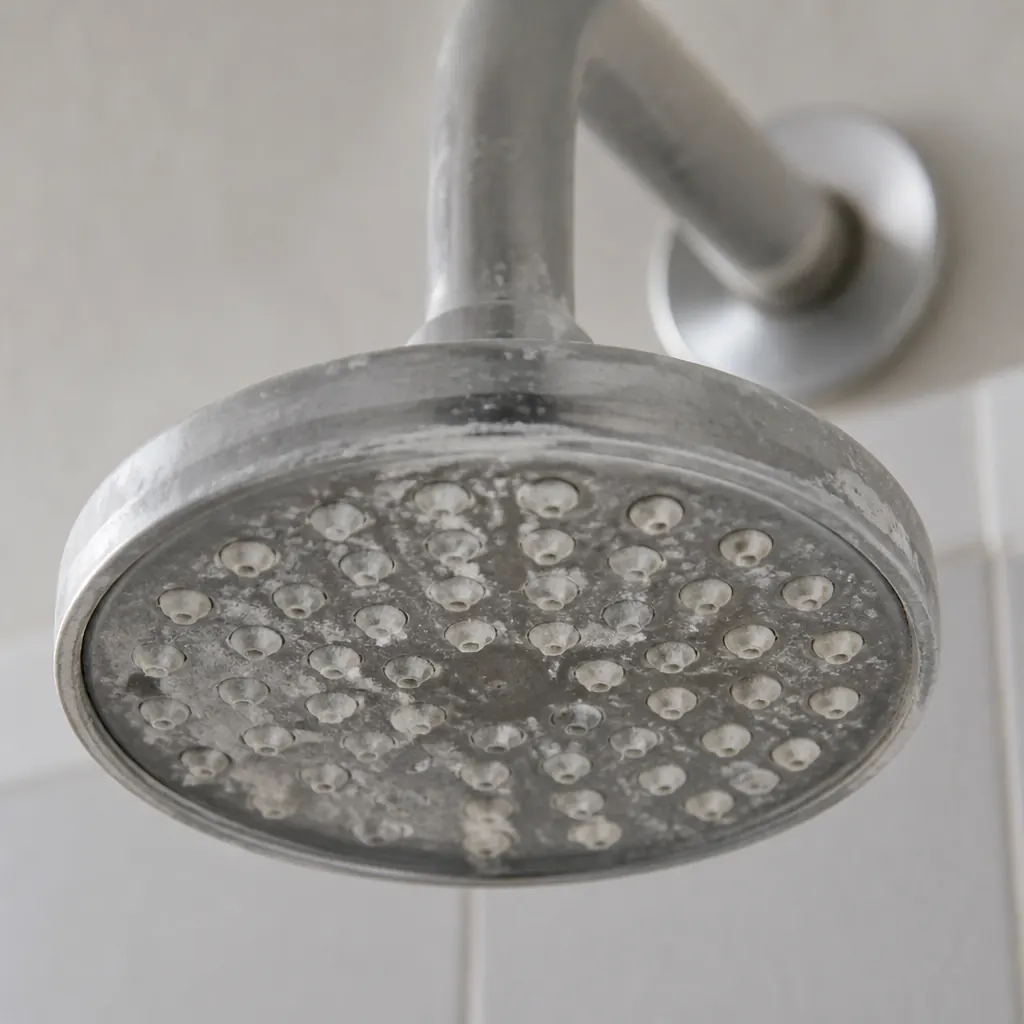
- Check your fixtures. White, chalky crust on showerheads and faucet aerators is calcium carbonate — the same mineral that’s coating your hair. If it’s there, hard water is in pla
For a precise number, a $10–15 hardness test strip reads grains per gallon (GPG). Above about 7 GPG, hard-water hair and scale problems become obvious. Our how to test your water hardness guide walks through it.
How to fix hard-water-damaged hair
There are two problems to solve: the immediate damage, and the ongoing cause.
Undo the existing damage:
- Use a chelating shampoo once a week. Chelating agents (like EDTA) bind to calcium and magnesium and wash the minerals off, unlike regular shampoo. Look for “chelating” or “clarifying” on the label.
- Follow with a rich conditioner every wash — mineral-coated hair is thirsty, and conditioning is how you restore flexibility.
- Consider a final rinse with distilled or filtered water to avoid redepositing minerals.
Stop the damage at the source:
- A whole-house water softener removes the calcium and magnesium before water reaches your shower. This is the only thing that truly softens shower water.
- A shower filter removes chlorine and sediment — which helps color-treated or sensitive-scalp hair — but it does not soften water. Don’t buy one expecting it will.
- If a full softener isn’t an option, washing less frequently and using distilled-water rinses is the practical workaround.
Most people see improvement within 2–3 washes of switching to a chelating shampoo, and full recovery once softened water is in place. The hair itself doesn’t need to be “repaired” — it just needs the mineral film gone so it can hold moisture and lie flat again.
Why conditioners alone don’t fix hard-water hair
A common mistake is throwing more, or more expensive, conditioner at the problem. That misses what’s actually wrong. The mineral-soap film sits on top of the hair shaft and blocks ingredients from reaching it.
When you condition mineral-coated hair:
- The conditioner’s moisturizers can’t penetrate the calcium/magnesium layer, so they rinse off instead of soaking in.
- The hair stays dry and brittle underneath the coating, no matter how much product you pile on.
- Heavy conditioners can even make things worse by sitting on top of the film and weighing hair down, adding greasiness on top of the brittleness.
The fix is sequencing, not adding more product. You have to remove the mineral layer first (with a chelating wash), then condition. Once the shaft is clean, a normal conditioner works as intended and you may find you need far less of it. The order matters more than the product itself.
Chelating vs. clarifying: know the difference
Not every “detox” shampoo does the same thing, and the distinction affects your hair-routine results:
- Clarifying shampoo removes product and oil buildup (silicones, heavy conditioners, styling products). It’s a general deep-clean.
- Chelating shampoo specifically binds to minerals (calcium, magnesium, iron, copper) and pulls them off the hair. This is the one that addresses hard water.
If you’ve been using a clarifying shampoo weekly and your hair still feels straw-like, that’s why — it’s cleaning off product but not the mineral film. Look for the word “chelating” on the label, or check the ingredient list for chelators like EDTA or citric acid. For hard-water hair specifically, chelating is the tool you want, used about once a week (more can over-strip).
Does softening the water regrow lost hair?
Let’s be precise about what a softener can and can’t do, because this is where the “hard water causes hair loss” myth does real damage.
- Can’t: make hair grow back that’s been lost to genetic balding (androgenetic alopecia), hormonal changes, or medical conditions. A softener doesn’t touch those causes.
- Can: stop the breakage that makes hair look thinner, by removing the mineral film that was drying and weakening the strands.
- Can: improve the appearance of density, because hydrated, uncoated hair lies closer together and reflects light, looking fuller.
If your thinning is at the roots with a receding hairline or widening part, that’s almost certainly not hard water — see a dermatologist about actual hair-loss causes and treatments. If your “thinning” is hair snapping off mid-shaft or leaving more in the brush than the drain, hard water is plausibly the culprit, and softening (plus a chelating wash) will help.
A 3-step recovery plan for hard-water hair
If you want a concrete routine, here’s the full sequence:
- Strip the buildup — one chelating/clarifying wash to remove the existing mineral film, then follow with a rich mask or conditioner to rehydrate the newly-clean strands.
- Maintain weekly — a chelating shampoo once a week (or every other week if your hair is delicate), with regular conditioner every wash.
- Stop the source — soften the water with a whole-house softener, or fall back to distilled-water final rinses if a softener isn’t in the cards.
Stick with all three for a month and the difference is usually striking — softer, shinier hair that tangles less and breaks less, simply because the mineral film is finally gone.
Quick reference
- The 60-second version: hard water doesn’t cause baldness, but it coats hair in minerals that make it break and look thinner.
- A chelating shampoo (not just clarifying) is the specific fix for mineral buildup — use it weekly.
- Soften the water (whole-house) or use distilled-water final rinses to stop the damage at the source.
- If thinning is at the roots or a widening part, the cause is genetic/hormonal, not hard water — see a dermatologist.
The takeaway
Hard water is hard on hair, but it’s a coating and dryness problem, not a follicle problem. Remove the minerals — first with a chelating wash, then with softened water — and the brittleness, dullness, and breakage that looks like thinning will largely resolve. If you’re seeing progressive, root-level hair loss, that’s a different conversation, and a dermatologist — not a water softener — is the right next step.